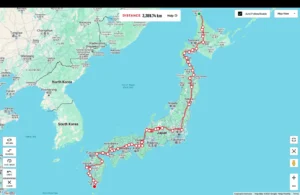
Why I Changed My Mind About Running For Charity
When I started planning this run, I had no intention of doing the whole charity thing. There’s something about it that doesn’t sit well with me: asking people to give money to a cause I care about, for doing something I’d be doing anyway. I didn’t want this to become “look at me doing this thing and look at what a good person I am for doing this”.
Charity adds complexity to the whole adventure. I need to liaise with the charities to discuss raising money for them and make sure there’s a natural fit. There has to be some thread within our story that ties those charities to us.
Then choosing a charity is a minefield. Are they using money effectively? Or are donations swallowed up in administrative costs? Working out which charities are highly rated and reputable becomes even more of a challenge when you are trying to find smaller, local charities.
And once we decided to add a charity element, we really wanted to support a local charity. While I’ve supported UNICEF in the past, and I still believe they do great work, we wanted to support charities fully embedded within the country we’ll be calling home for almost three months.
Through the journey, we’ll be relying on village shops and countless everyday acts of hospitality. Being able to give something back to community projects along the route feels right. If we manage to connect with the charities along the way, we can help share their stories too.
That giving back factor was a big part of the decision, but not the only part. When we were in Sapa, Vietnam, we saw children walking the streets late at night, dressed in traditional clothes, selling trinkets for tourists. In Vang Vieng, Laos, we came across an abandoned kitten who we fell in love with, but with no shelters to turn to, we had no choice but to leave it to fend for itself.
Moments like these reminded us how vital it is to have organisations that stand up for children and animals who don’t have anyone else to. And that’s why we’re proud to be supporting Animal Rescue Kansai and Mirai No Mori. Because they do incredible work that we think makes a difference.
And as for how I feel now, I still feel uneasy about raising money for charity. I worry that it comes across as some sort of virtue signalling or a way of promoting the run. But even if that is what people think, it shouldn’t matter. At the end of the day, if there’s a chance to do something that makes the world a little better, we should do it.
And with that in mind, below is a little about each charity:
Animal Refuge Kansai (ARK)
Animal Refuge Kansai (ARK) acts as a safety net for homeless, abandoned animals or those otherwise in need of help. ARK actively rescues animals, provides them with the care needed and search for a new family to give them a second chance at happiness. However, it is not just rescue work that ARK does. ARK aims to educate and spread awareness about animal welfare, the importance of spaying and neutering animals, and the need to revise current animal welfare laws.
ARK is one of Japan’s oldest shelters, founded in Osaka in 1990. The founder, Elizabeth Oliver, has dedicated her life to animals here for almost 4 decades and was awarded the MBE in 2012 for her services to animals and civil society in Japan.
In the decades since, they have worked towards a society which respects and protects animals. While rescuing, caring for and rehoming animals, they will strive for improvements in the level of animal welfare for the animals of Japan.
Mirai no Mori
In Japan, nearly 30,000 children live in institutional care due to abuse, neglect, or loss of family support. At 18, these children are required to live independently and begin to manage every aspect of their lives. While care homes provide basic needs, they lack opportunities for experiential learning due to the limitation of the current child welfare system, making it nearly impossible to be fully ready for this sudden & substantial change. Many children are overwhelmed by the new problems they encounter resulting in unfortunate outcomes including: homelessness, poverty, isolation and exploitation.
Mirai no Mori provides year-round programs that foster essential life skills for youth in care homes. Children gain confidence, communication skills, and a sense of belonging through outdoor learning and mentorship. Their curriculum supports each stage: elementary and middle school campers, high school participants in the Leadership in Training (LIT) program, and graduates who have aged out of the care system-creating a pathway of growth into adulthood.